22 August, 2020
Connecting the wiring of an impeller
Completed project
Extending the electric wires coming from the motor in an impeller is typically left up to the builder. Because the wires pass through the high-speed airstream behind the impeller it is important to keep the area as small and streamlined as possible. A couple of impeller suppliers provide something for this, but most of the time this is left up to the creativity of the model builder.
For the Confluence I decided to try something new. New in the sense that I had not done it before, but I did get the inspiration from a thread in a German forum, and that person apparently got the idea from a thread in an American forum.
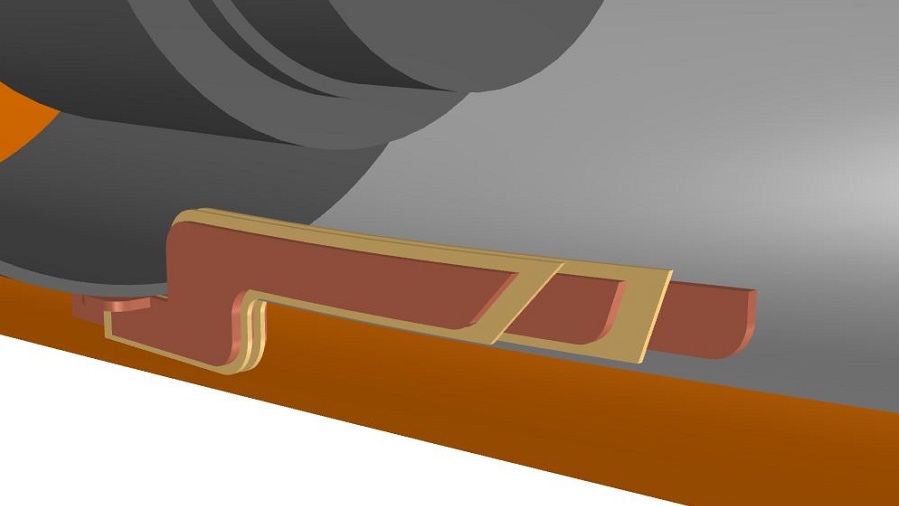
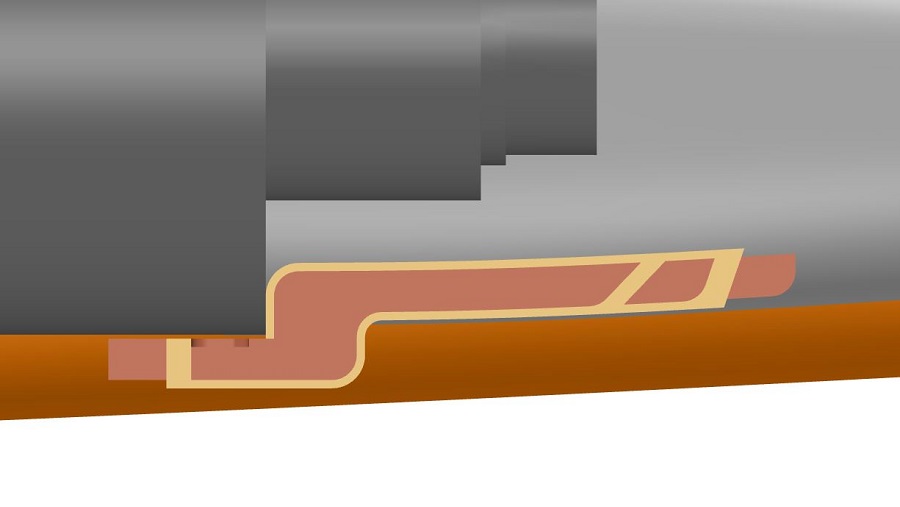
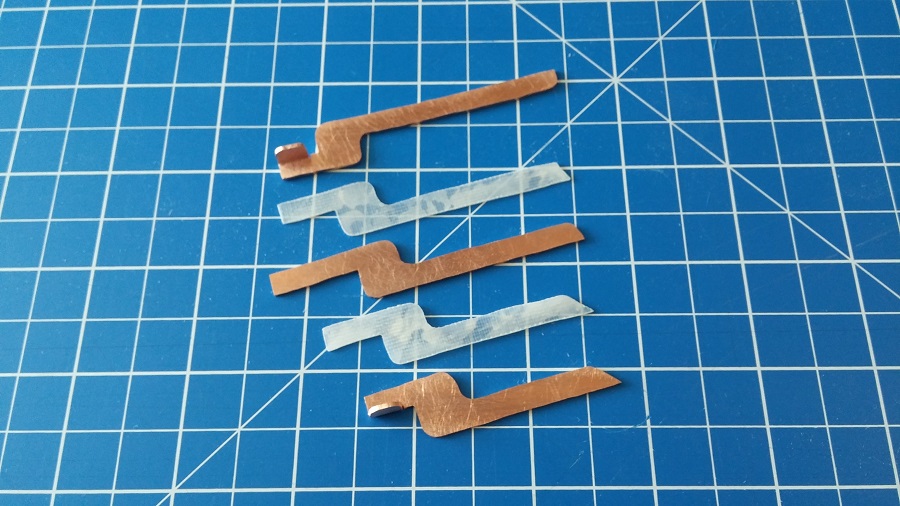
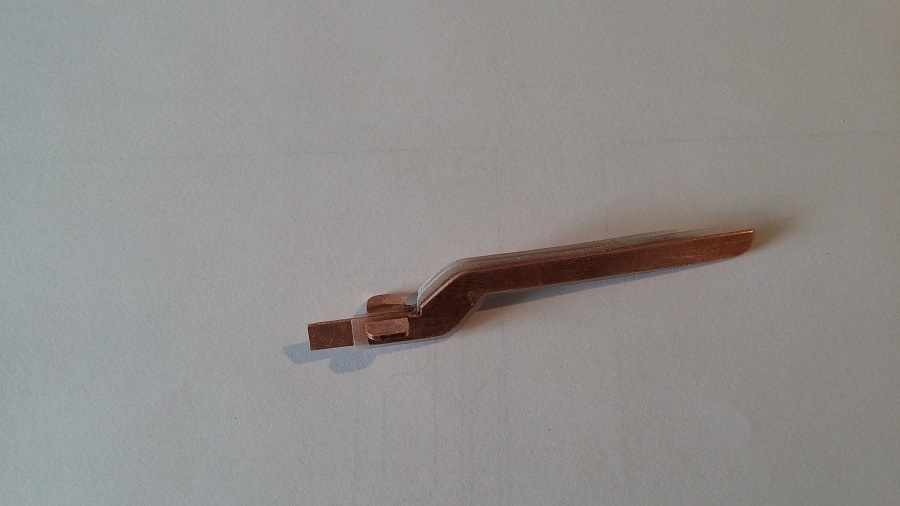
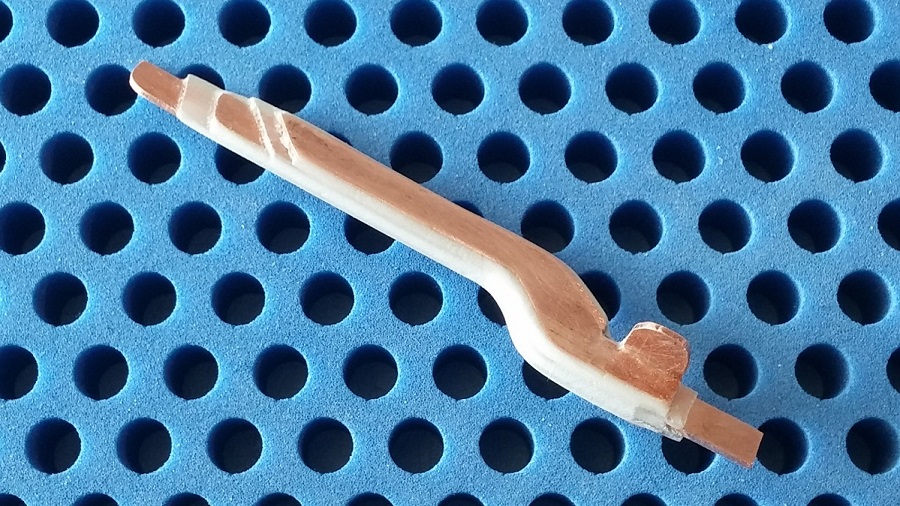
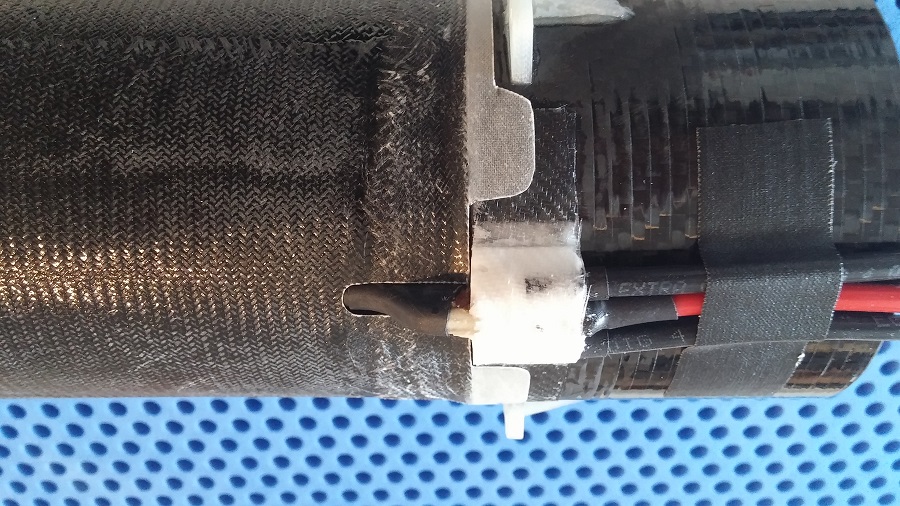
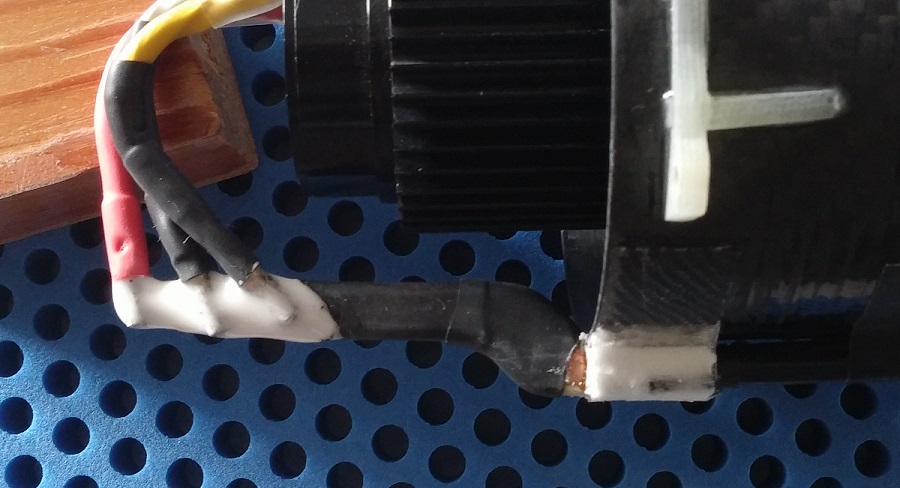
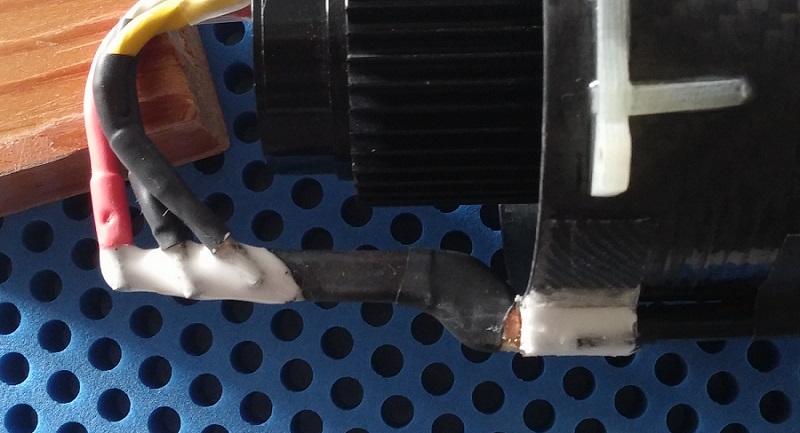
Instead of soldering extension wires directly to the leads coming from the motor, flat copper strips are used for the first short distance from the motor leads to the outside of the impeller. Three copper strips, 5mm wide, are cut from a 1mm thick plate. These strips are stacked on top of each other. two glassfibre strips, 0.5mm thick, are placed between the three copper strips for insulation. These glassfibre strips are 1mm wider on each side to ensure proper insulation. The “top” and “bottom” edges are then also covered with epoxy + microballoons to close the surface and create a rounded edge. The length and shape of the copper strips is based on the shape of the outlet duct and the length of the wires coming from the motor. I did not want to cut these wires shorter because the surface of the copper strands apparently have a coating that is difficult to remove. Removal of this coating is necessary before soldering is possible.
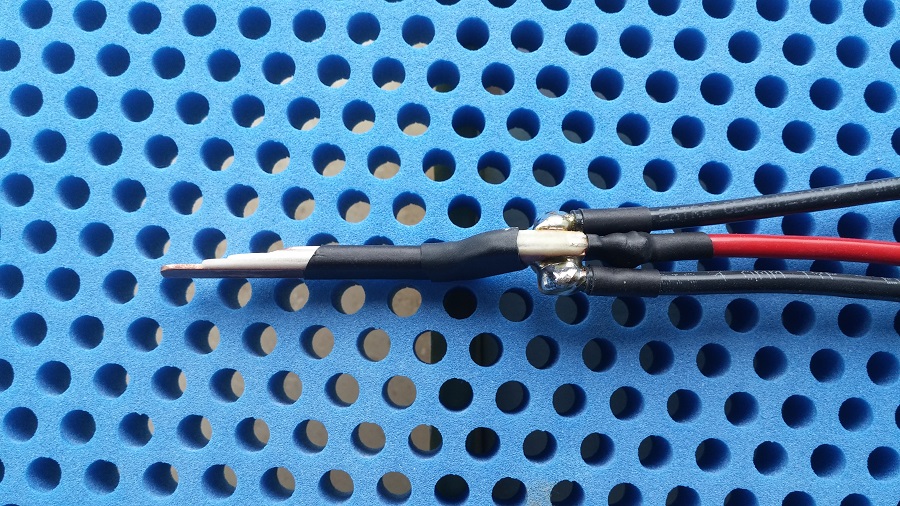
At the front of the strips, extension wires are soldered that will connect to the speed controller. A length of shrinking tube has been placed over the copper strips to insulate this on the outside.
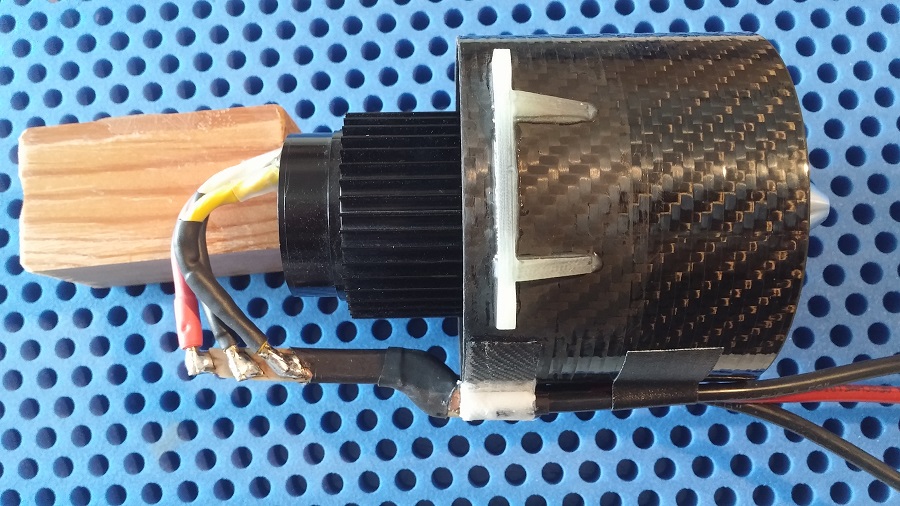
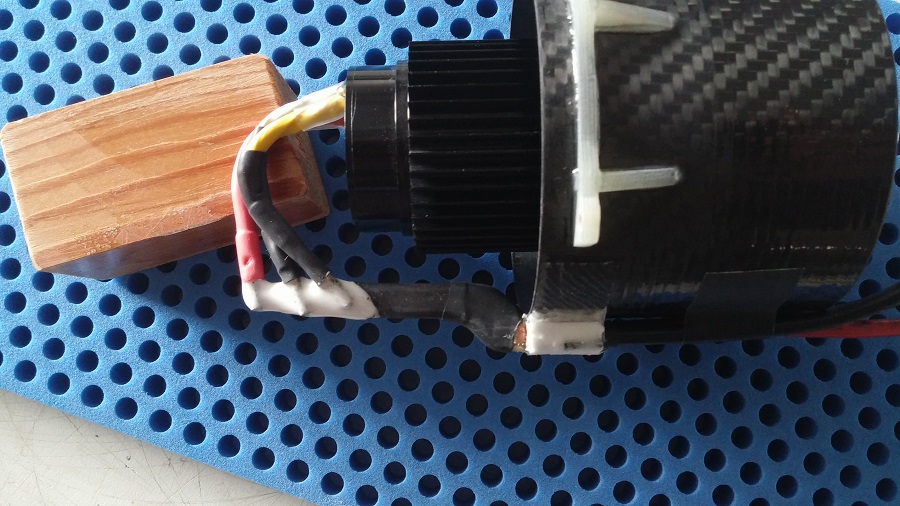
Because the mantle of the impeller is molded in carbon fiber, a thin glassfibre plate is bonded to the surface as an insulator before glueing the copper strips onto it.
After glueing the copper strips to the impeller, the motor wires are soldered on, and some epoxy + microballoons is applied for insulation.